
Commitment to safeguarding statement
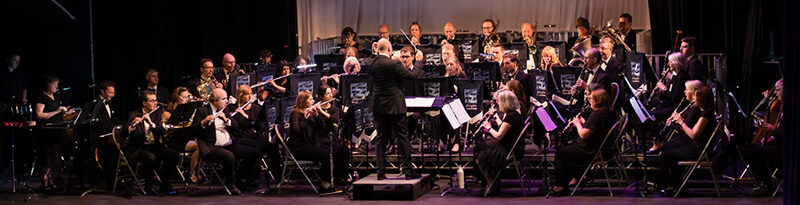
Abingdon Concert Band (hereafter referred to as “the Band”) believes that a child, young person or adult at risk should never experience abuse of any kind. The Band recognises its responsibility to promote the welfare of all children, young people and adults at risk. The Band is committed to safeguarding the well-being and protecting from harm any children, young people and adults at risk.
This policy is to ensure the safeguarding of any child, young person or adult at risk who is a member of the Band or who attends rehearsals or concerts on a short term basis as a dep for the Band. This policy sets out how safeguarding will be implemented and, if a concern is raised, the procedures we will follow.
The expectations in this policy apply to Band members, the MD and any deps joining the Band at rehearsals or concerts.
Definition of vulnerable people
- Children up to the age of 16 or young people aged 16-18
- Adults aged over 18 at risk as defined by the Safeguarding Vulnerable Groups Act 2006. This might include adults with a learning or physical disability, a physical or mental illness, chronic or otherwise, including an addiction to alcohol or drugs, or reduced physical or mental capacity.
- Risk is determined by the activity an adult is taking part in and not solely on the personal characteristics or circumstances of the adult, as such any adult can be at risk, and the risk can be temporary.
Implementation of safeguarding mechanisms
Appointment of a Safeguarding Officer:
The Band will identify a Safeguarding Officer who must be i) an adult, ii) a Band Member and iii) be Disclosure & Barring Service (DBS) checked.
The Band will ask its members to identify if they are DBS-checked and these names will be held on record along with copies of the DBS document by the Band’s Secretary and will also be available to the Safeguarding Officer.
The names of the Safeguarding Officer and DBS-checked adults will be reviewed annually to ensure their DBS check is in date and they are still willing to continue the role.
On joining the Band:
If a vulnerable person is joining the Band, written permission (email is acceptable) should be obtained from parents/guardians where appropriate, and before attendance at any Band rehearsal or event occurs. All Band members are requested to provide emergency contact details. The written permission should additionally include details of the agreed methods by which the vulnerable person can leave a rehearsal, concert or any other Band event (hereafter referred to as “the Activity”) including whether the vulnerable person is allowed to leave unaccompanied and, if not, the names and contact details of those responsible for collecting them. If the vulnerable person is in education at a school or college then details of the school or college’s safeguarding team should be provided so they can be alerted in the event of an incident.
This information should be held on record by the Band’s Secretary and must be available to the Band’s Safeguarding Officer.
During Band activities:
A minimum of one DBS-checked Band Member must be identified as the Activity’s Safeguarding Contact for the Activity and be in attendance throughout the Activity. This person may be the Band’s Safeguarding Officer or the role may be delegated to another DBS-checked Band Member. If the role is delegated then the information obtained when the vulnerable person joined the Band regarding emergency contact details and agreed methods by which the vulnerable person can leave the Activity should be made available to the Activity’s Safeguarding Contact.
There should be more DBS-check Band Members present at the Activity when practically possible. If vulnerable people of different gender will be taking part in the Activity, DBS-checked Band Members of different gender must be in attendance too.
When the vulnerable person is a child, the total number of adults in attendance at the Activity (not necessarily DBS checked) compared with the total number of children should be in line with the ratios shown in the table below as per Ofsted recommendations1:
| Child’s age | Number of adults | Number of children |
|---|---|---|
| 0-2 | 1 | 3 |
| 2-3 | 1 | 4 |
| 4-8 | 1 | 6 |
| 9-12 | 1 | 8 |
| 12-18 | 1 | 10 |
A vulnerable person is not to be left alone with any adult.
After Band activities:
Two adults (one of whom should be the Activity’s Safeguarding Contact) should be the last to leave a venue once the Activity has finished and will be responsible for ensuring vulnerable people get home in accordance with the agreed method.
Additional support:
If approached by the vulnerable person for support with a concern that is not a safeguarding concern or is an issue separate from the person’s involvement in the Band, the Safeguarding Officer may signpost support organisations to the vulnerable person as appropriate. This should be done in agreement with the Committee and with consent of the vulnerable person’s parents/guardians and their school or college’s Safeguarding team where applicable.
Procedures for raising safeguarding concerns and incidents of abuse
If any Band member, the MD or Deps witness, suspect or are informed of a witnessed or suspected safeguarding concern or incidence of abuse they should immediately report it to the Band’s Safeguarding Officer.
If the Safeguarding Officer is not available, or is involved in or connected to the concern or abuse, it should be reported to the Activity’s Safeguarding Contact.
If an individual wishes to report an incident of abuse against themselves they should report it to the Safeguarding Officer, the Safeguarding Contact or an individual they trust.
Procedures for dealing with concerns and incidents of abuse
The Safeguarding Officer (or Safeguarding Contact in their absence) will first make a decision based on the following factors:
- If the vulnerable person is in immediate danger or needs emergency medical attention – call the police and/or ambulance service
- If a criminal or suspected criminal incident has occurred call the police
- If a vulnerable person is in need of protection request an assessment by the local authority social care department
- If the person at the centre of the allegation is working with vulnerable persons at the current time remove them from direct contact with vulnerable people
The Safeguarding Officer should also immediately inform the Chair, Committee and Trustees. The Safeguarding Office, Chair, Committee and Trustees will cooperate with the police or local authority in dealing with the reported incident.
If none of the above applies the Safeguarding Officer (or Safeguarding Contact in their absence) will take the following actions:
- Make a note of the concern or incident reported to them
- Notify the Band’s Chair who will notify the Committee (excluding any committee members who are involved in the incident) and Trustees
- Initiate an internal investigation
An internal investigation will involve the following steps taken jointly by the the Chair, Safeguarding Officer, Committee and Trustees (these steps may also be undertaken additional to any police or local authority investigations if the police or local authority deem it appropriate to do so):
- Informing all parties involved of the reported concern or incident as soon as possible
- Informing the family/guardians of the vulnerable person involved of the reported concern or incident as soon as possible
- Arranging separate meetings with all parties within 10 days of the reported incident.
- Meetings will be attended by the Safeguarding Officer and at least one other committee member.
- The purpose of these meetings will be to gather evidence
- All parties may bring a representative to the meeting. The family/guardians of the vulnerable person must attend with them.
- All parties will also be invited to submit a written statement in advance of the meeting.
- Once meetings have taken place the committee will communicate to all parties, in writing and within 5 days the following:
- A decision to escalate the incident to the relevant authority
- A notification that a decision could not be reached and further investigation will take place, identifying a timeline and procedures
- A decision that the concern was unfounded. A decision of unfounded can be reached if there is no evidence or proper basis to support the concern raised or incident reported.
Disciplinary Action: If abuse is found to have taken place the appropriate authorities will decide on the disciplinary action with the full cooperation of the Chair, Safeguarding Officer, Committee and Trustees.
Documentation
All records relating to the incident including the original report, minutes of all meetings, any statements taken, the decision and the disciplinary action to be taken will be kept securely with access restricted to those involved in the investigation and the parties involved. Any guidance from the appropriate authorities regarding documentation and appropriate retention and restrictions would always supersede the Band’s approach.
Lessons learned
Regardless of the decision reached, following a reported concern or incidence of abuse the Committee will review this policy to ensure it was fit for purpose and implement any improvements or modifications identified.
Resources
The following resources can be utilised to support the Chair, Safeguarding Officer, Committee and Trustees in handling any concern or incident reported:
- NSPCC (0808 800 5000 help@nspcc.org.uk)
- Local Authority Designated Officer for Safeguarding (01865 815956 / 07833 436649 lado.safeguardingchildren@oxfordshire.gov.uk)
- Citizens Advice Bureau (0800 1448848)
References
1 Making Music. (no date) Safeguarding Policy template. Available at: https://www.makingmusic.org.uk/sspx/resource/safeguarding-policy-template-6 (Accessed: 9 August 2026)
Version history
| Author | Version | Effective date | Changes from previous version |
|---|---|---|---|
| Abingdon Concert Band Committee | 1.0 | 15Jun2026 | n/a |